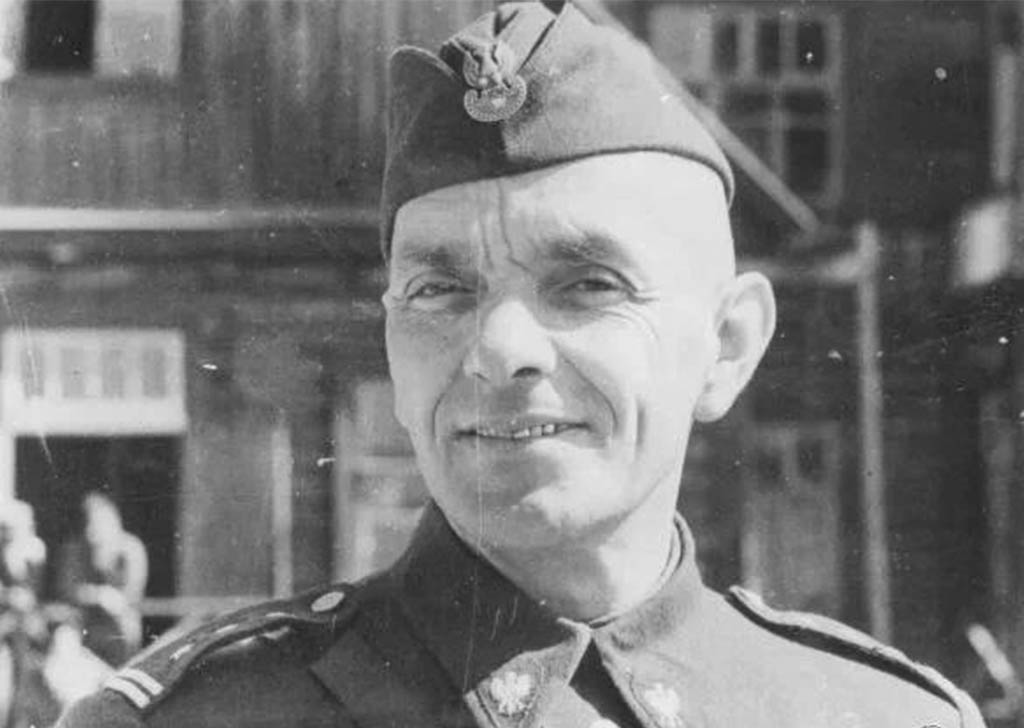
Zygmunt (Sigmund) Henrik Berling (Polish. Zygmunt Henryk Berling; April 27, 1896, Limanova — July 11, 1980, Warsaw) was a Polish military commander, General of the Polish Army Armor, Lieutenant General (USSR, 03/13/1944). During the Second World War— he was commander of the 1st Army of the Polish Army.
From 1914 he served in the 2nd and 4th Infantry regiments of the Polish Legion of Jozef Pilsudski, allied to the Austro-Hungarian army, and from June 1917 to October 1918 in the Austro-Hungarian Army.
At the end of World War I, he joined the newly created Polish army, becoming an officer in the 4th Infantry Regiment. After the war, he remained in the armed forces. He was promoted to major in 1923. In 1925 he graduated from the Higher Military School in Warsaw. He was Chief of Staff of the 15th Infantry Division, served at the headquarters of the V Corps in Krakow. In 1930, he was promoted to lieutenant colonel and was commander of the 6th and then the 4th Infantry Regiment. He retired from active military service in July 1939.
On June 22, 1941, 13 Polish officers appealed to the Soviet government to allow them to fight against Nazi Germany. After the conclusion of the Sikorsky—Maysky treaty, on August 17, 1941, Berling was released from prison and appointed chief of staff of the renovated 5th Infantry Division, and then commander of the temporary camp for Polish soldiers in Krasnovodsk.
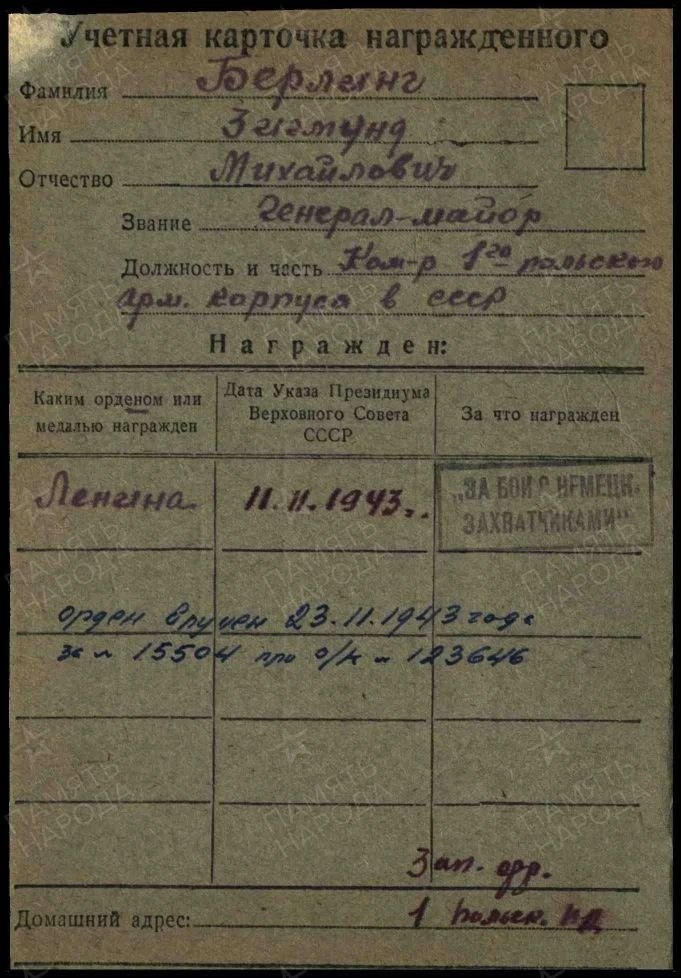
In May 1943, Berling was appointed commander of the 1st Polish Infantry Division named after Tadeusz Kosciuszko. The 1st Polish Division received its baptism of fire in October 1943 in the Battle of Lenino (Belarus). The division, which was part of the 33rd Army of the Western Front, was tasked with breaking through the German defenses and liberating the settlement.
On August 10, 1943, a resolution was adopted by the Council of People’s Commissars of the USSR awarding the rank of Major General to Zygmunt Berling, commander of the Tadeusz Kosciuszko 1st Polish Division.
From August 1943, he commanded the 1st Corps of Polish troops in the USSR, and from March 1944, he commanded the 1st Polish Army in the USSR. In July of the same year, he led the 1st Army of the Polish Army, which took part in the Lublin-Brest operation (1944) as part of the 1st Belorussian Front.
On June 22, 1944, he was appointed Deputy Commander-in-Chief of the Polish Army, and in October he was sent to Moscow to study at the Military Academy of the General Staff. K. E. Voroshilova.
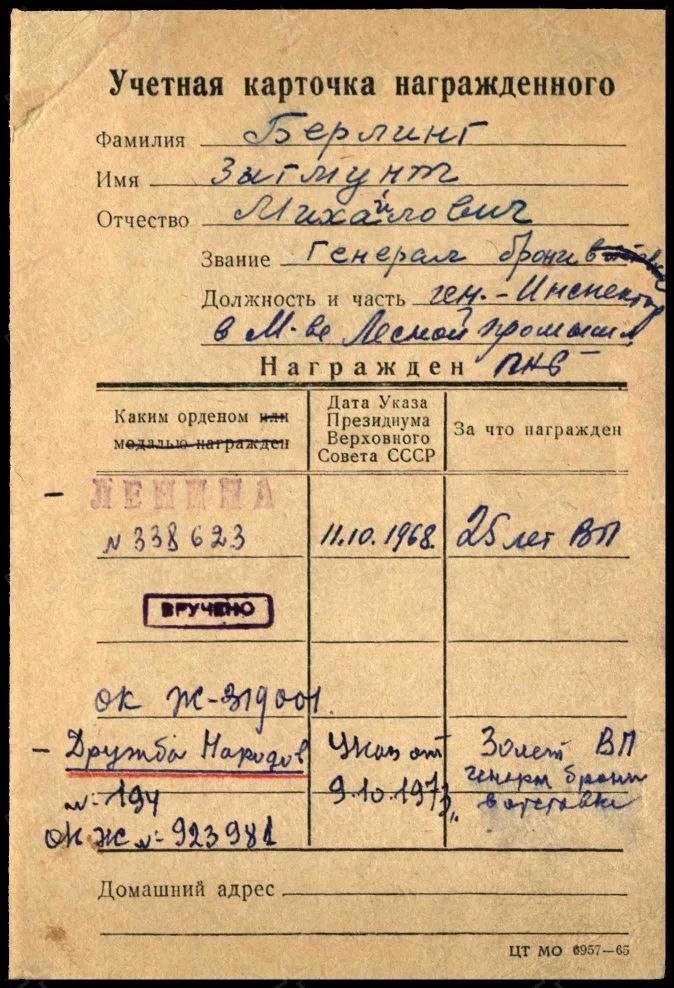
Berling returned to Poland in 1947 and soon became head of the Academy of the General Staff of the Polish Army (1948-1953). After retiring in 1953, Z. Berling worked in the civil service: he was a deputy minister in the Ministry of State Agricultural Enterprises (state Farms) (Polish. Ministerstwo Państwowych Gospodarstw Rolnych, 1953-1956) and Agriculture (Polish. Ministerstwo Rolnictwa, 1956-1957), General Hunting Inspector in the Ministry of Forestry (Polish. Ministerstwo Leśnictwa, 1957—1970). In 1963 he joined the PORP. Awards: Silver Cross of the Order of the Virtues of the People; 2 Orders of Lenin; Order of Friendship of Peoples (09.10.1973), Medal “For the Defense of Moscow”.
He died on July 11, 1980 in Warsaw (Poland). He was buried at the Powonzki Military Cemetery in Warsaw.